


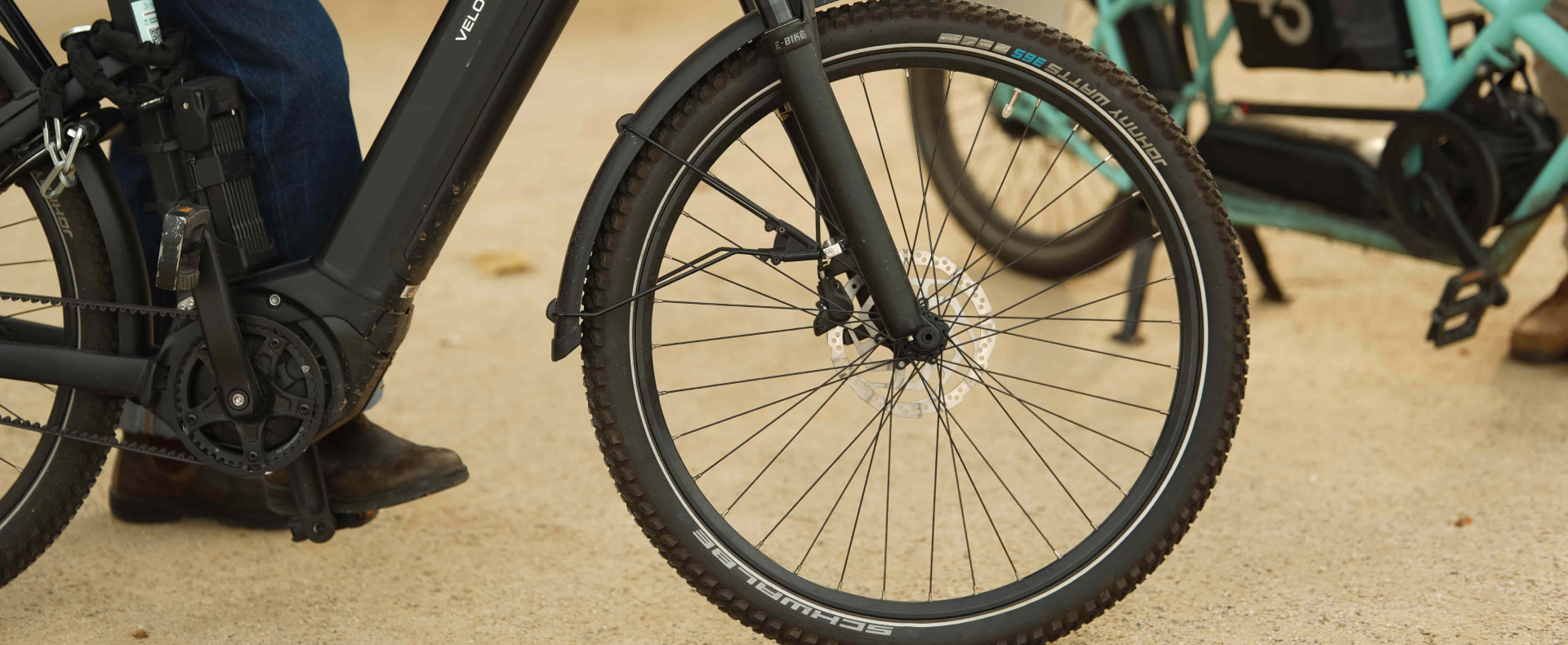
Anyone shopping for an electric bike or speed pedelec will eventually run into a question that really matters: should you choose a mid-drive motor or a rear hub motor?
On paper, both do the same thing: provide assistance while you ride. But the location of the motor has a surprisingly large impact on how the bike feels, accelerates, and performs.
For completeness, there's also a third option: the front hub motor. However, you rarely see these today. They're mostly found on older e-bikes or, occasionally, electric folding bikes where compact design matters more than ride feel.
For most modern e-bikes, the choice comes down to a mid-drive motor or a rear hub motor.
There's another important nuance, though. With traditional e-bikes, you may not always have a choice. Today, the mid-drive motor is by far the standard. Major players such as Bosch and Shimano dominate the market, meaning most electric bikes come equipped with a mid-drive motor.
Speed pedelecs are a different story. Here you'll find both mid-drive and rear hub motors, making motor choice a much bigger factor.
Ready for the explanation? Buckle up! 🚲
What does an e-bike motor actually do?
An e-bike motor assists your pedaling effort. But where that motor is located largely determines how the bike rides, accelerates, and feels.
The two most common systems are:
- a mid-drive motor (mounted centrally at the crankset)
- a rear hub motor (built into the rear wheel)
It may sound like a small detail, but it definitely isn't.
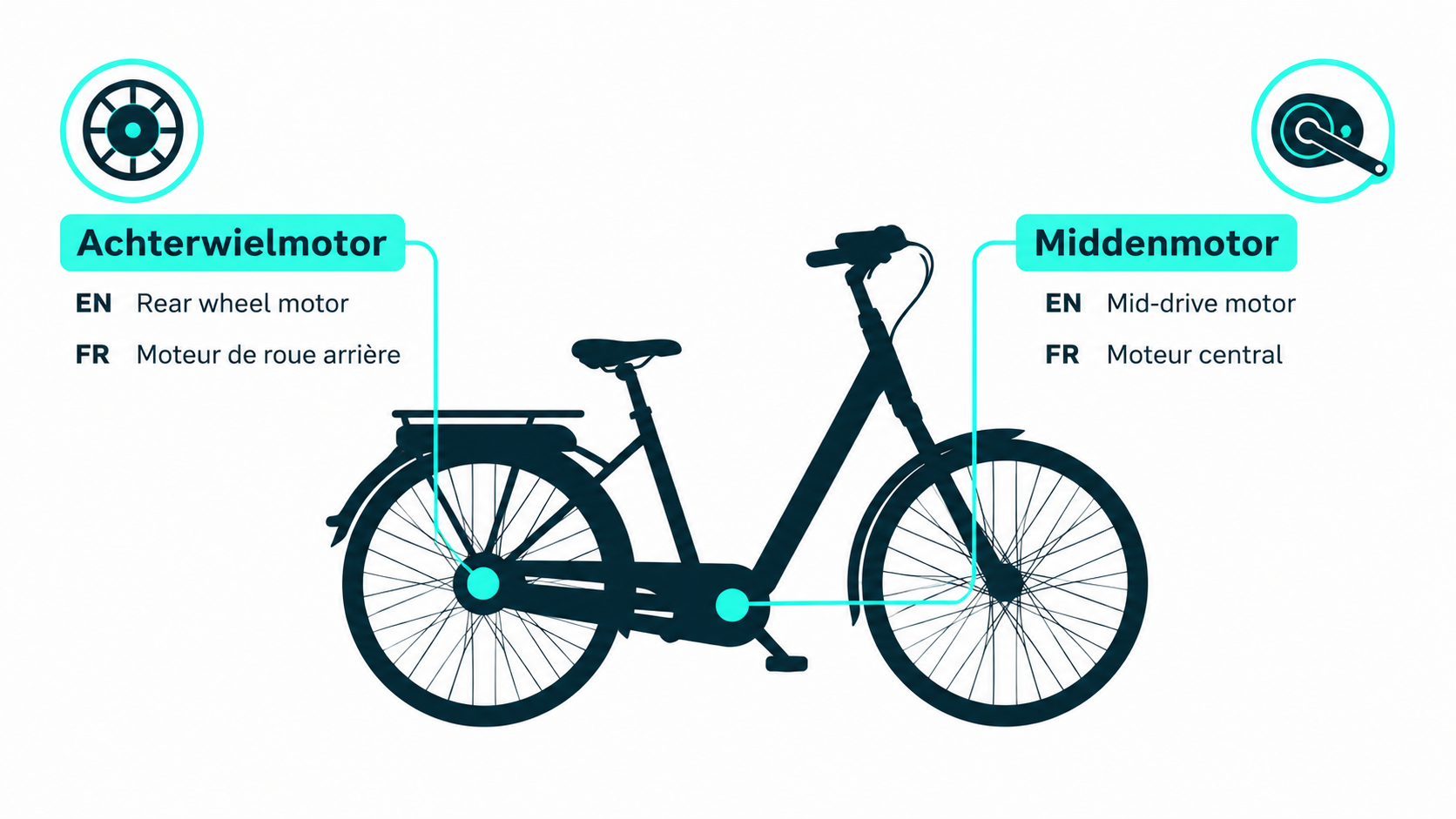
The mid-drive motor: like you're simply stronger
With a mid-drive motor, the motor sits low and centrally, close to the pedals. This creates excellent weight distribution and assistance that naturally responds to your pedaling power.
Many riders describe the feeling like this: it's as if you've suddenly become stronger. The bike isn't pulling you forward or pushing you from behind. It feels smooth, predictable, and balanced.
That's exactly why mid-drive motors are by far the most popular choice on traditional e-bikes today. For commuting, leisure rides, and everyday mobility, comfort and a pleasant riding experience matter most. That's where the mid-drive motor shines.
Advantages
✅ Natural ride feel
✅ Excellent weight distribution
✅ Very capable on bridges and hills
✅ Efficient assistance, even at low speeds
✅ Comfortable and predictable handling
Less strong in
❌ More expensive than other systems
❌ More complex technology
❌ Maintenance can be slightly more expensive
💡 Choose a mid-drive motor if you're looking for a natural riding experience that simply feels great.
The rear hub motor: direct power and quick acceleration
A rear hub motor works differently. Instead of smooth, gradual assistance, it often feels like the bike is pushing you forward. That may sound less subtle, but it comes with some clear advantages.
You get direct acceleration, a sportier character, and strong power delivery at higher speeds. That's exactly why rear hub motors are so common on speed pedelecs.
A speed pedelec needs to accelerate quickly and comfortably support speeds up to 45 km/h (28 mph). A rear hub motor is technically very well suited to this because the drive is applied directly to the wheel.
Advantages
✅ Direct acceleration
✅ Sporty ride feel
✅ Powerful assistance at higher speeds
✅ Ideal for long commuting distances
Less strong in
❌ Less natural assistance
❌ More weight concentrated at the rear
❌ Less efficient on steep hills than a mid-drive motor
💡 Choose a rear hub motor if speed and a powerful riding experience are at the top of your wish list.
Mid-drive vs rear hub motor: the key differences
Which motor do you see most often today?
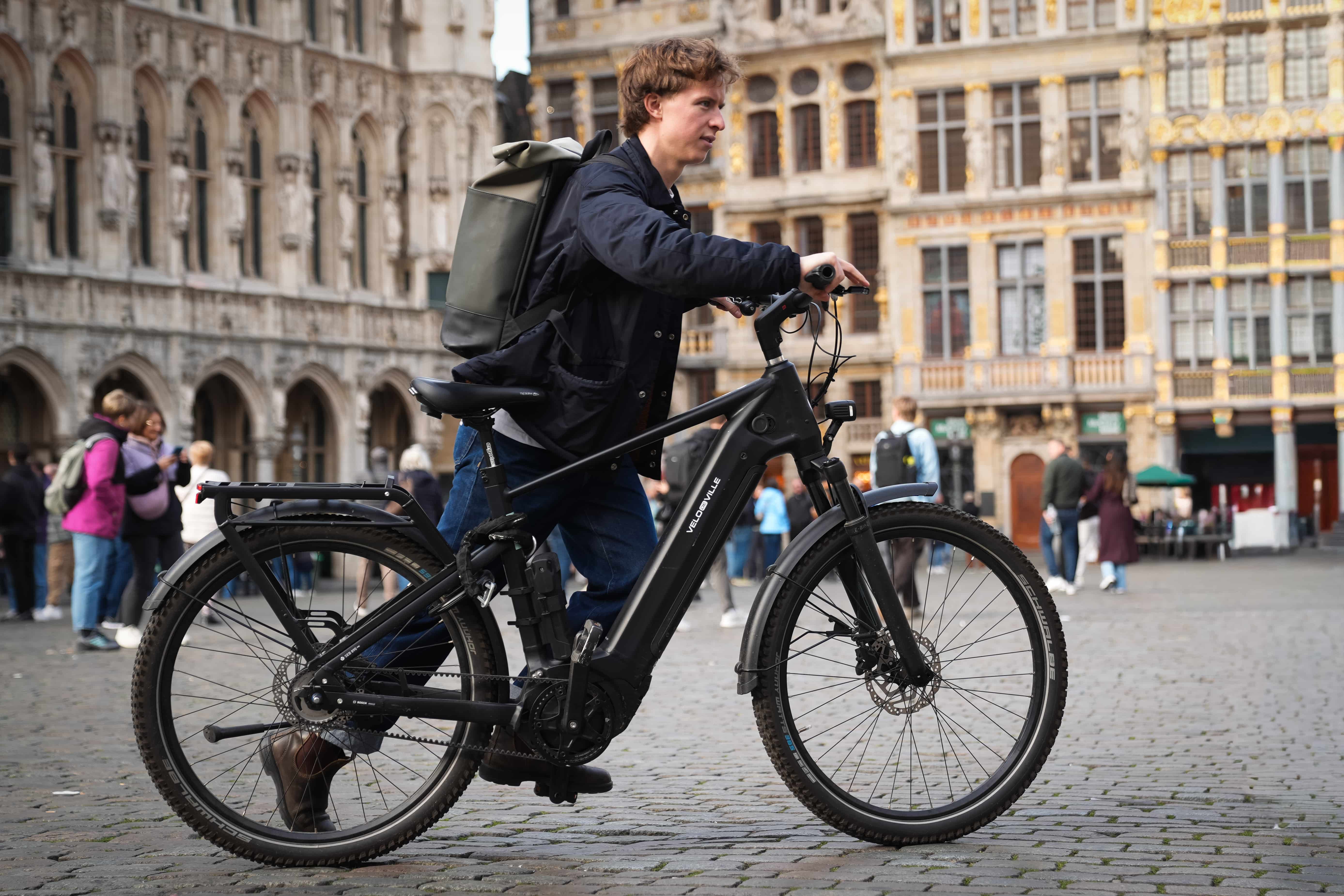
If you're buying a new electric bike today, chances are you'll end up with a mid-drive motor.
That's no coincidence. Major manufacturers such as Bosch and Shimano focus almost exclusively on mid-drive systems, which means the vast majority of modern e-bikes use this setup.
Rear hub motors are less common on traditional e-bikes but remain extremely popular within the speed pedelec segment.
In other words: for a standard e-bike, your decision is often less about the motor type and more about the brand, battery, frame, and intended use.
Speed pedelec: which motor should you choose?
For speed pedelecs, motor choice plays an even bigger role than it does on regular e-bikes.
Choose a speed pedelec with a Bosch motor and you'll automatically get a mid-drive motor. Bosch exclusively uses this system because it provides natural assistance and a stable riding experience, even at higher speeds.
Many other speed pedelec manufacturers opt for a rear hub motor instead. This delivers a more direct ride feel, rapid acceleration, and powerful support all the way up to 45 km/h (28 mph).
Mid-drive motor
✅ Natural ride feel
✅ More control in busy traffic
✅ Balanced weight distribution
✅ Comfortable on varied routes
Rear hub motor
✅ Quick acceleration
✅ Very powerful feel
✅ Ideal for long, straight commuting routes
✅ Comfortable at higher cruising speeds
Neither system is objectively better. It all comes down to what matters most to you: a natural cycling experience or maximum speed sensation.
Which one should you choose?
For most e-bikes, the market has already made the decision: the mid-drive motor is today's standard. If you're looking for a comfortable bike for everyday use, it's usually a safe bet.
If you're shopping for a speed pedelec, however, the choice between a mid-drive motor and a rear hub motor becomes much more relevant.
What about a front hub motor?
Front hub motors still exist, but they're much less common today. You'll occasionally find them on older e-bikes, budget models, or certain electric folding bikes. In modern lease bikes and speed pedelecs, you'll almost always encounter either a mid-drive motor or a rear hub motor.
Ultimately, there is no universally right choice. The best motor is the one that matches your route, riding style, and expectations.
Need help deciding? We'd be happy to help!
Read more of Bram's biking tips
- How to stay safe on the road with your lease bike
- The advantages and disadvantages of belt-driven bikes
- Everything you need to know about e-bike maintenance and support
- How sustainable is an e-bike, really?
...and new tips are added every month, so keep an eye on our blog overview!
Questions about bike leasing? We're just one contact form away! 😏👇

Bram is our in-house bike expert and shares a new bike tip every month to help you ride smarter. You may have spotted him at a test day, always ready with advice and plenty of enthusiasm. He helps grow Joule Local, so you can lease your bike through your favorite local bike dealer. His constant companion? The Orbea Terra Race, which he rides to the office every day, rain or shine. Got a bike question? Bram’s happy to help!
Alles verliep zeer vlot. Geen extra papierwerk, alles werd door Joules geregeld. Heel tevreden over de service.

Goede communicatie en uitleg. De persoon die het concept is komen voorstellen heeft dit duidelijk gedaan. De testritten waren ook goed georganiseerd.

Top ervaring! Klantenservice is top. Je kan er terecht met al je vragen en ze blijven altijd even vriendelijk. En ik heb best veel vragen gesteld. Levering was top. Zeker een aanrader voor iedereen.

Vlotte service, snel antwoord en zeer vlot in gebruik. De offertes van de fietsenwinkel werden snel verwerkt en overzichtelijk afgeleverd in een leasing-formule.

Heel gemakkelijk dat de technieker op het werk komt! De technieker was vriendelijk. Onderhoud was snel gedaan. Ik heb heel gemakkelijk de afspraak kunnen wijzigen. Ik heb daarvoor een heel vriendelijke en behulpzame persoon aan de lijn gehad.


.avif)


