


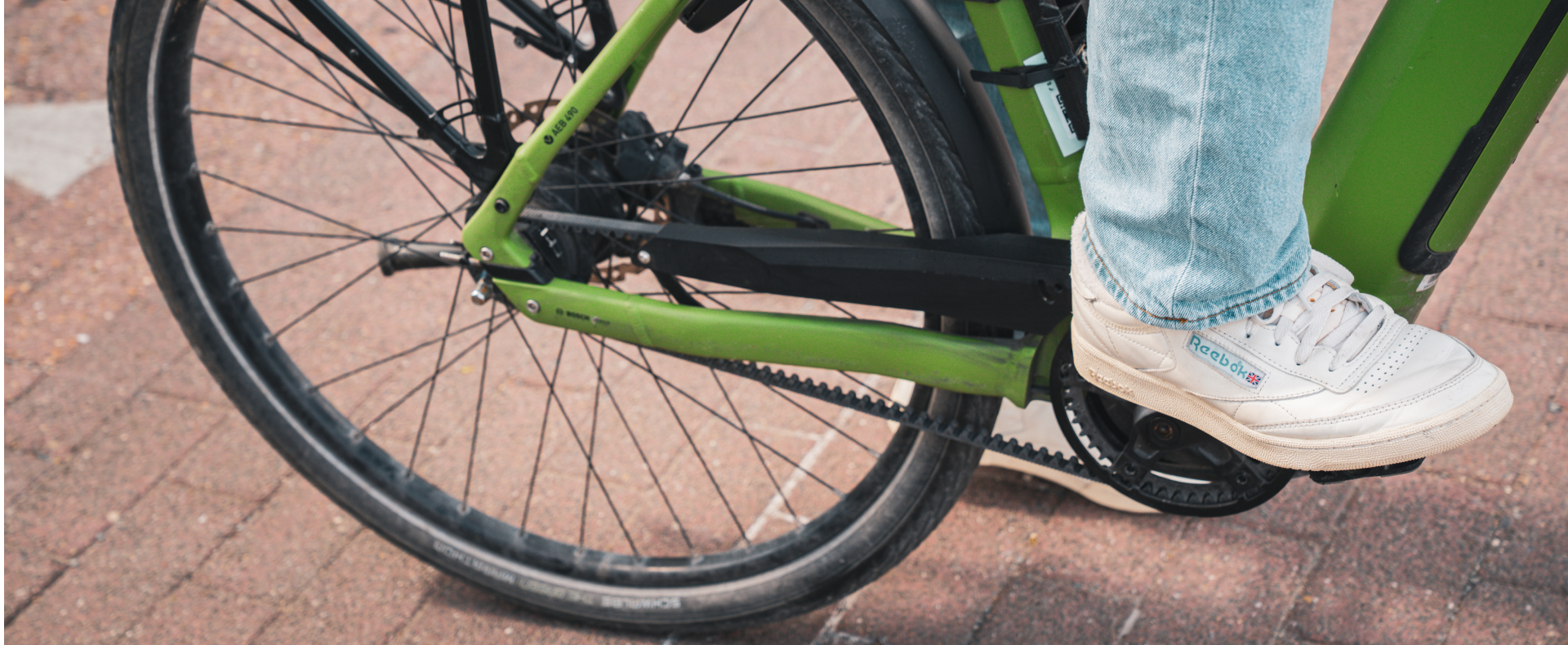
First things first: what is a belt drive?
On a traditional bike, the drivetrain uses a chain. With a belt drive, that chain is replaced by a carbon-reinforced belt. You’ll mainly find these on city bikes, speed pedelecs, trekking bikes, and some e-bikes.
Not sure what type of bike you’re looking for yet? Check out our recommendations below:
- Leasing an e-bike? Discover the 5 best electric bikes!
- The fastest and most powerful speed pedelecs
- Leasing a cargo bike? Compare the 5 best models and prices
- Top 5 longtail bikes: versatile and practical
Advantages of belt drive bikes
If you’re currently looking for a new bike, especially an e-bike, you’ll increasingly come across the term belt drive. While bikes have traditionally used chains, belt drives are steadily gaining popularity. And that’s no coincidence. A belt drive offers significant advantages in terms of maintenance, comfort, and durability.
So what makes a belt drive so interesting? And who is it really for? Let’s break it down!

1. Low maintenance
One of the biggest advantages of a belt drive is its minimal maintenance. Unlike a chain, a belt does not need lubrication. No oil, no grease, no mess.
That means:
- no rust
- no squeaking or creaking noises
- no time spent cleaning and lubricating
For daily riders, such as commuters, this is a huge benefit. And if you ride year-round in all weather conditions, you’ll notice the difference right away.
2. Clean, quiet, and comfortable
Because a belt doesn’t require grease, your bike and your clothes stay clean. No more black chain marks on your pants or jacket.
Belt drives are also known for their whisper-quiet performance. Even under load, in headwinds, or on hills, the drivetrain remains smooth and silent. This creates a more relaxed and comfortable riding experience, especially on longer rides.
3. Long lifespan and reliability
A high-quality belt (such as a carbon belt) lasts significantly longer than a traditional chain. While chains often need replacing after a few thousand miles, belts can easily last between 15,000 and 30,000 kilometers.
The sprockets also wear down more slowly, which means:
- fewer replacements
- lower long-term maintenance costs
- less risk of unexpected breakdowns
For many riders, this more than compensates for the higher upfront cost.
That said, your bike still needs maintenance. Check out our tips here: Everything you need to know about e-bike maintenance and support.
4. Ideal for all weather conditions
Rain, mud, snow, or road salt: a belt drive keeps performing. It is resistant to weather and dirt and doesn’t lose efficiency in wet or dirty conditions.
That makes it ideal for:
- daily use
- winter riding
- commuters who don’t want to depend on the weather
5. A perfect match for e-bikes
E-bikes, especially mid-drive models, generate significantly more torque on the drivetrain. While chains wear faster under this pressure, belts are specifically designed to handle it.
The result:
- less wear
- more consistent performance
- longer drivetrain lifespan
Belt drives also work perfectly with:
- internal gear hubs
- continuously variable transmissions
- automatic shifting systems
This means fewer adjustments, fewer repairs, and higher reliability, exactly what you want from a lease bike.
The result is a quiet, powerful, and highly reliable drivetrain that perfectly matches the comfort-focused nature of modern e-bikes.

Disadvantages of belt drive bikes
You might have noticed we’re big fans of belt drives. However, they’re not perfect. Here are the main downsides.
1. Higher upfront cost
Because a belt drive requires a specific frame and is often paired with more expensive components like an internal gear hub, the overall price is higher. You’re not just paying for the belt, but for an entirely different drivetrain system.
Although a belt lasts longer than a chain, replacement parts are more expensive. Maintenance may be lower over time, but when replacement is needed, the cost is higher.
2. Less flexibility in gearing
A belt cannot shift like a derailleur system, so you’re limited to setups like internal gear hubs. This makes the range smaller and less suitable for riders who need many gears or prefer a more sporty riding style.
3. Requires a special frame
Since a belt cannot be opened like a chain, the frame must have a split to install it. This means only specific frames are compatible, and retrofitting is usually not an option.
4. Harder to fix on the go
A chain can often be repaired or replaced temporarily on the road. A belt requires exact parts and proper installation, making roadside fixes much more difficult. You’ll likely need a bike shop.
5. Less appealing for DIY enthusiasts
While chain systems are relatively easy to maintain and adjust yourself, belt drives require more precise setup and specific knowledge. This makes them less attractive for people who like working on their own bikes.
Belt drive is a strong choice (most of the time)
A belt drive bike isn’t for everyone, but if you value comfort, low maintenance, and reliability, it’s an excellent choice. Especially for daily use or commuting, the difference is noticeable right away.
Still deciding between a chain or a belt? It helps to look at how you use your bike. If you want something practical and hassle-free, a belt drive is usually the better option.
Check out more of Bram’s bike tips:
- Ride safely with your lease bike
- Compact, electric, and theft-proof: 4 bikes for city living
- Does my e-bike slow down above 25 km/h?
- How long does it take to fully charge my bike battery?
- Can I share my bike with a partner of a different height?
… And we add new tips every month, so be sure to check out our blog overview!
Interested in leasing a bike with a belt drive? Get in touch via the form below and we’ll explore the options together!

Bram is our in-house bike expert and shares a new bike tip every month to help you ride smarter. You may have spotted him at a test day, always ready with advice and plenty of enthusiasm. He helps grow Joule Local, so you can lease your bike through your favorite local bike dealer. His constant companion? The Orbea Terra Race, which he rides to the office every day, rain or shine. Got a bike question? Bram’s happy to help!
Alles verliep zeer vlot. Geen extra papierwerk, alles werd door Joules geregeld. Heel tevreden over de service.
Goede communicatie en uitleg. De persoon die het concept is komen voorstellen heeft dit duidelijk gedaan. De testritten waren ook goed georganiseerd.

Top ervaring! Klantenservice is top. Je kan er terecht met al je vragen en ze blijven altijd even vriendelijk. En ik heb best veel vragen gesteld. Levering was top. Zeker een aanrader voor iedereen.

Vlotte service, snel antwoord en zeer vlot in gebruik. De offertes van de fietsenwinkel werden snel verwerkt en overzichtelijk afgeleverd in een leasing-formule.

Heel gemakkelijk dat de technieker op het werk komt! De technieker was vriendelijk. Onderhoud was snel gedaan. Ik heb heel gemakkelijk de afspraak kunnen wijzigen. Ik heb daarvoor een heel vriendelijke en behulpzame persoon aan de lijn gehad.


.avif)


