


Sustainability at Joule is not a separate strategy. It is part of how we work every day.
That is why in 2025 we took part in the Voka sustainability charter (VCDO). Through this program, companies commit to concrete actions around environment, social and governance. Not abstract promises, but tangible steps toward more sustainable operations.
At the moment we are still waiting for the official recognition of the charter, which will take place before the summer. One thing is already certain though: we will participate again in 2026.
Not because we have to, but because we believe better commuting also means better business.
What is the Voka sustainability charter?
The Voka sustainability charter helps companies structurally embed sustainability into their operations. Participating organizations define concrete actions that contribute to the United Nations’ Sustainable Development Goals (SDGs).
Companies work on these actions throughout the year and report on their progress. If the objectives are achieved, they receive the charter.
For Joule, this trajectory was an opportunity to strengthen sustainability not only externally, but also internally and within our value chain.
Sustainability at Joule
Our approach is built around three principles that guide how we work:
- Stakeholder intimacy
- Fun but functional
- Transparency, always everywhere
For us, sustainability is not only about environmental measures. It is also about well-being, collaboration and transparency.
In 2025 we therefore focused on three pillars: environment, social and governance.
Environment: reducing our impact
As a company that promotes cycling, we naturally contribute to more sustainable mobility. At the same time, we critically assess the impact of our own activities and our value chain.
That is why we took several concrete steps in 2025.
Analysis of our CO₂ impact
We mapped our CO₂ impact to better understand where our largest impact lies. This analysis helps us take more targeted actions around energy consumption, logistics and supplier choices in the coming years.
A more conscious and sustainable bike portfolio
During the coronavirus period, the cycling sector built up large inventories. Today we deliberately choose a more selective and sustainable bike portfolio. We do not simply include every model in our offering, but focus on reliable components such as Bosch and Shimano systems.
These systems are known for their long lifespan, reusable components and strong service networks. This means bikes last longer and parts need to be replaced less often.
Proactive maintenance to extend bike lifecycles
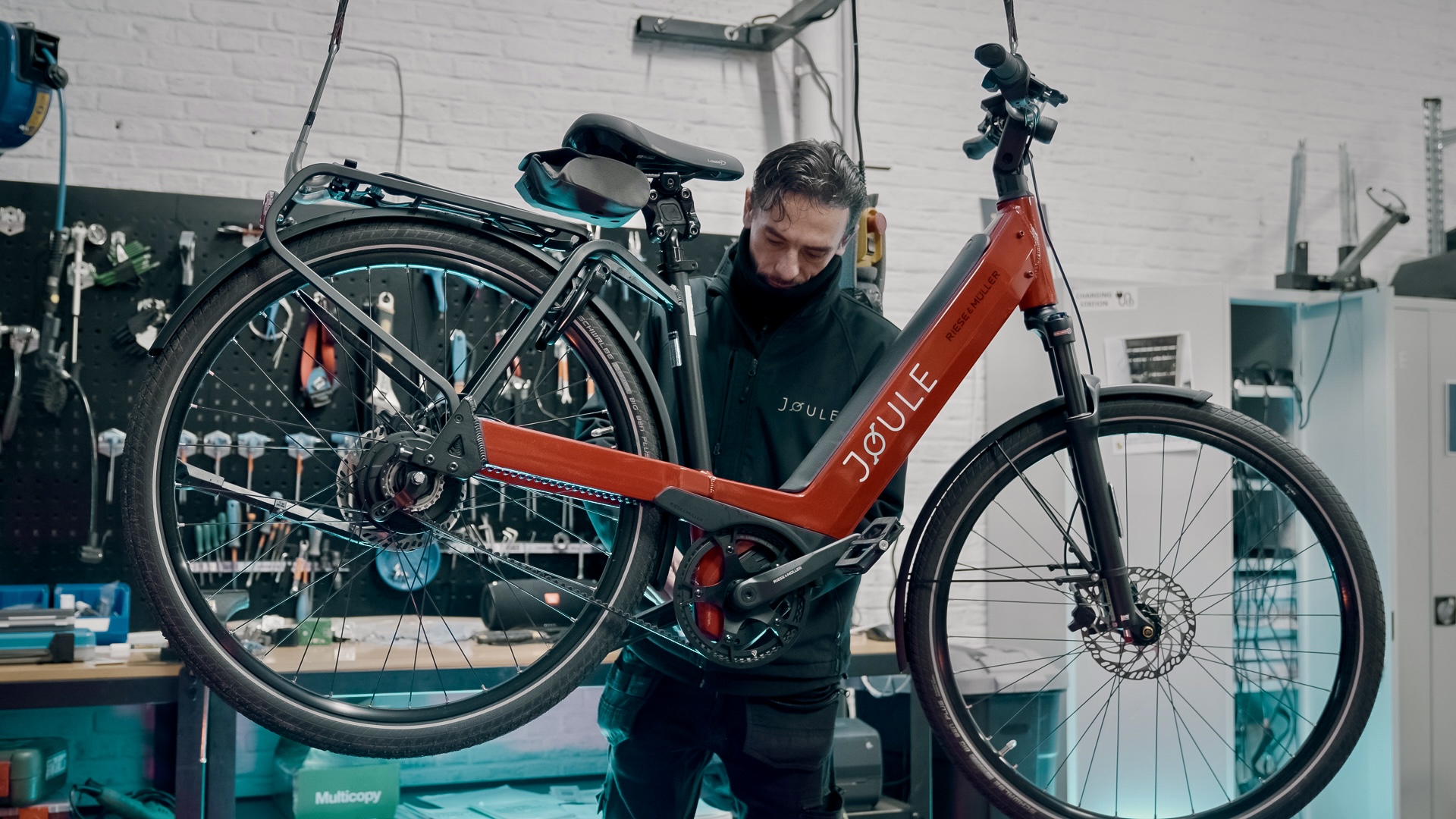
A bike that lasts longer is automatically more sustainable. That is why we actively encourage timely maintenance at local dealers and through mobile service points.
This prevents larger repairs and significantly extends the lifespan of bikes. In practice, we often see well-maintained lease bikes continue to ride for years after the lease period ends.
Want to get started yourself? Take a look at our maintenance tips!
Circularity in components
We also look for circular solutions at component level. For example, hub gears can be removed from a wheel and re-spoked into a new wheel, meaning the entire component does not have to be replaced. This saves both resources and costs for the rider.
Sustainable packaging and logistics
When transporting bikes, we use reusable protective materials such as foam and choose recyclable paper packaging wherever possible instead of plastic.
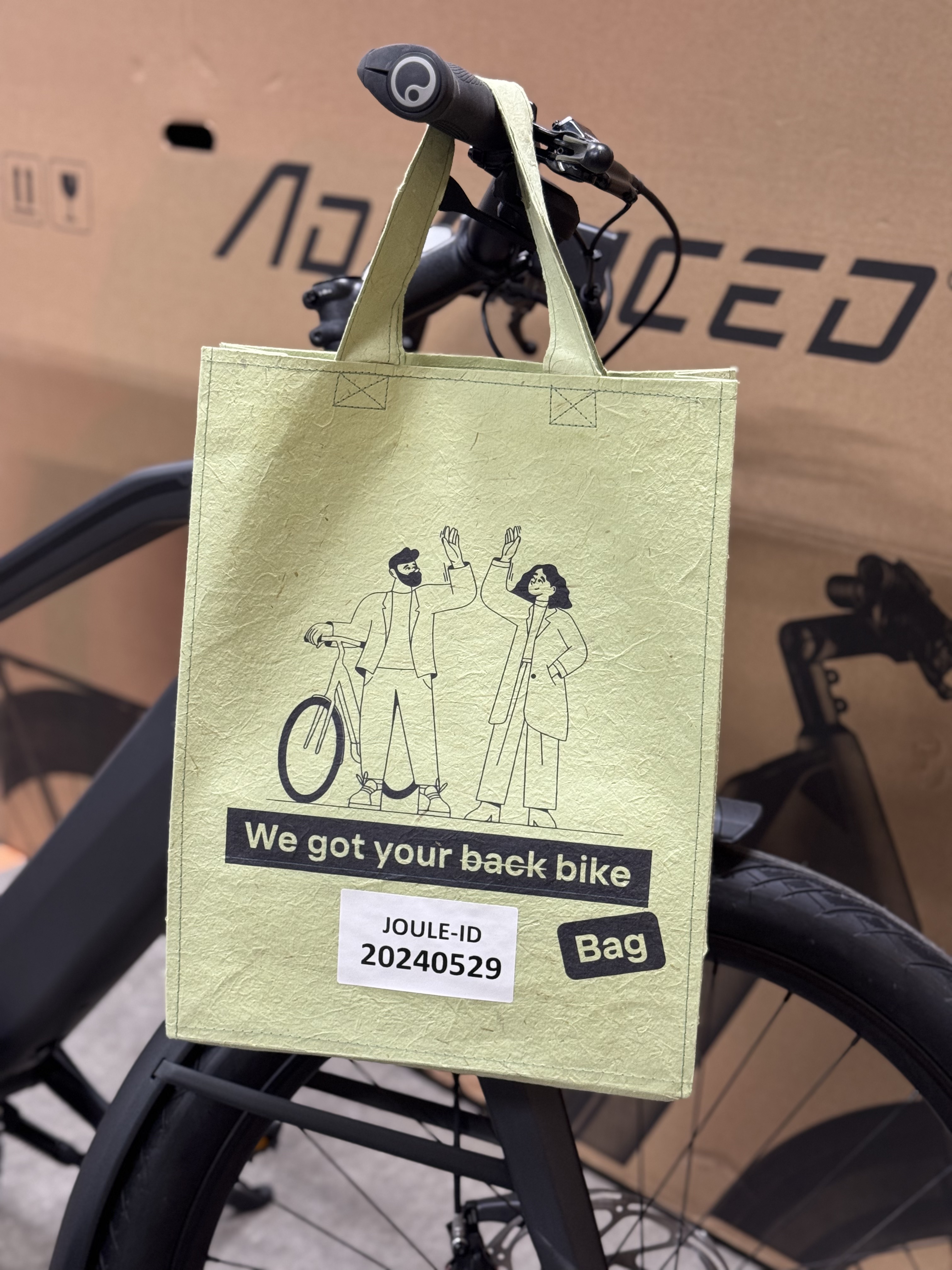
Customers receive a small bag with documentation and practical information together with their bike. These bags are made from recycled paper.
Working with local suppliers
We deliberately collaborate with Belgian suppliers of bike components, such as VDP Parts and Dewo. Shorter supply chains mean less transport and greater transparency about the origin of parts.
We also see positive developments among bike manufacturers. Some frames are now produced closer to Europe, which reduces transport distances and logistics impact.
What about our own mobility?
As a bike leasing company, it may not come as a surprise that almost everyone at Joule commutes to work by bike.
Employees can lease a bike through their compensation package, making sustainable commuting the natural choice.

Social: investing in people
Sustainability is not only about the environment. It is also about people, well-being and creating opportunities. At Joule we therefore invest heavily in a healthy and engaged work environment.
Strong onboarding and guidance
New colleagues start with a buddy system and structured onboarding, helping them quickly find their way within the team and learn about both the company and the sector.
Talent development and growth
We encourage employees to continue developing themselves through training, knowledge sharing and internal growth opportunities. As a small but strong team, colleagues can also take on different roles and further develop their talents.
Well-being and health at work
We consciously invest in initiatives that support the well-being of our team, such as:
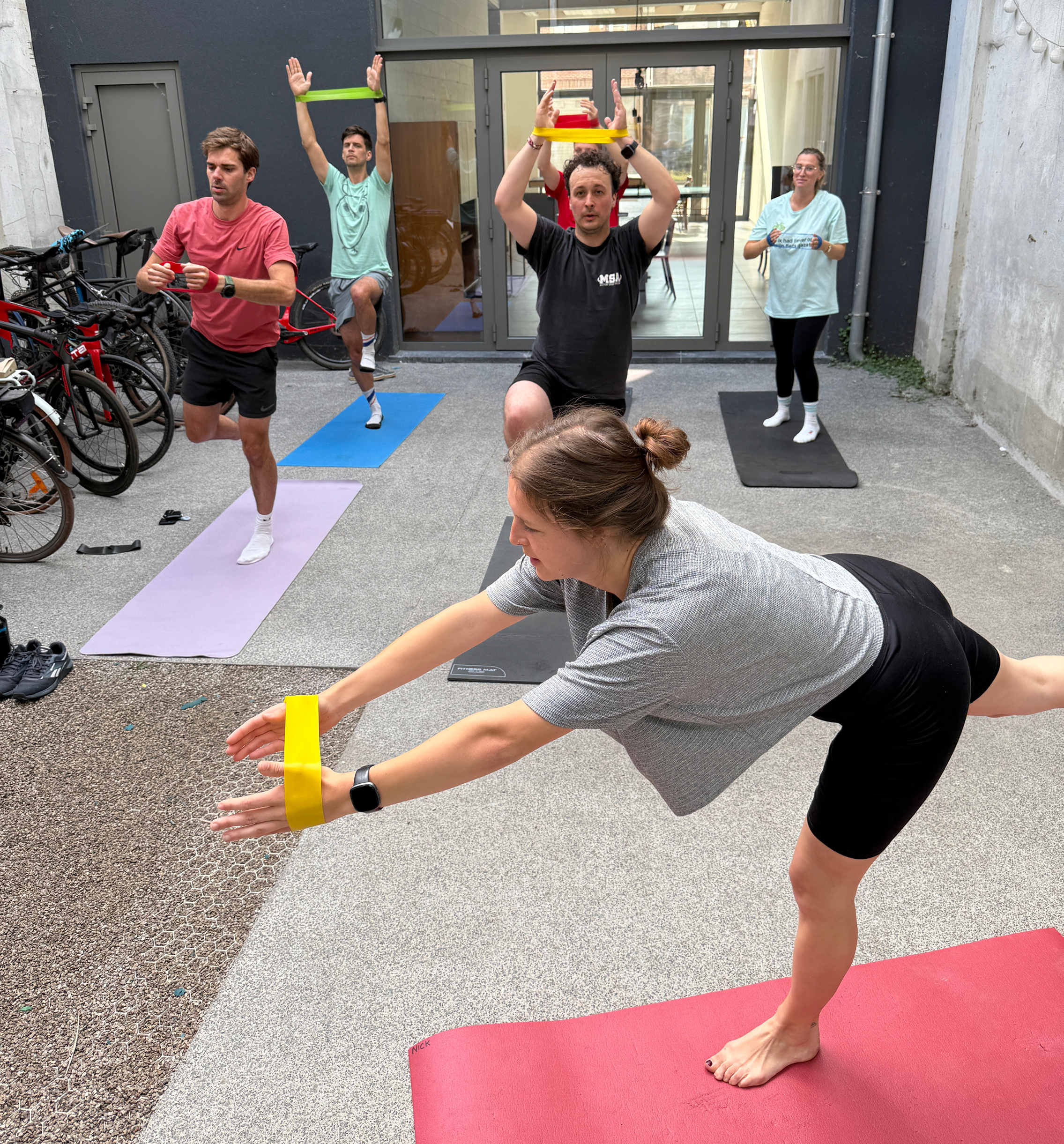
- sports activities and monthly pilates sessions
- free fruit at the office
- team activities through our Culture Club
- lunch & learn sessions that also support local businesses
These initiatives create a healthy work environment while strengthening team culture.
Collaboration with social enterprises
We collaborate with social enterprises such as E-bis, which handle the circular processing of second-hand bikes. This gives bikes a second life while creating social employment opportunities. Learn more about refurbished bike leasing.
We also support initiatives around social bikes, making bicycles available to people who might otherwise have limited access to sustainable mobility.
Governance: transparent and responsible business
Sustainable entrepreneurship also requires clear structures and transparency.
That is why Joule works with several initiatives that contribute to strong governance.
Code of conduct
We work with a clear code of conduct that guides how we collaborate with colleagues, customers and partners.
Listening to customers through NPS and Trustpilot
Through our Net Promoter Score surveys and Trustpilot reviews we actively gather customer feedback. The insights from these surveys are translated into concrete improvement actions for our services.
Commuters’ Club
Through the Commuters’ Club we build a community around sustainable mobility. Customers, partners and employees can share experiences and find inspiration around cycling and commuting.
More transparency in the value chain
A next step in our sustainability journey is to better understand the sustainability of our suppliers. In the coming years we want to engage with bike manufacturers and wholesalers to learn more about their production processes, materials and sustainability initiatives.
What will 2026 bring?
Our participation does not stop after one year.
In 2026 we will participate again in the Voka sustainability charter and continue building on the work of 2025.
Several themes we want to further explore include:
- value chain analysis with bike suppliers and wholesalers
- further examining the lifecycle management of bikes
- strengthening health policies and ergonomics in the workplace
- developing product safety and prevention policies
- improving information security, with the goal of achieving ISO 27001 certification
We also want to create more awareness around sustainable choices within bikes themselves. Cycling is naturally ecological, but the production and lifecycle of a bike also play an important role.
A journey supported by the entire team
What might be most important to us is that this journey is supported by the entire team.
From inventory management to onboarding, from supplier choices to bike maintenance. Sustainability runs throughout how we work.
Or as we like to say: better commuting also means better business.
We are looking forward to the official recognition of the Voka sustainability charter 2025. And after that, we will simply keep going.
Because sustainable mobility never stops at a single charter.

As a mobility content specialist at Joule, Elke translates complex mobility topics such as bike leasing and mobility budgets into clear, accessible content. She helps HR teams and employees organize mobility more easily and get more people on bikes. She has a passion for language, communication, and fully charged bike batteries. Her constant companion is her Gazelle Ultimate C5 in Denim Blue Gloss, which she rides through Ghent in turbo mode. Her favorite bike route? Any route that leads to a coffee bar. Follow Elke on LinkedIn!
Alles verliep zeer vlot. Geen extra papierwerk, alles werd door Joules geregeld. Heel tevreden over de service.

Goede communicatie en uitleg. De persoon die het concept is komen voorstellen heeft dit duidelijk gedaan. De testritten waren ook goed georganiseerd.

Top ervaring! Klantenservice is top. Je kan er terecht met al je vragen en ze blijven altijd even vriendelijk. En ik heb best veel vragen gesteld. Levering was top. Zeker een aanrader voor iedereen.

Vlotte service, snel antwoord en zeer vlot in gebruik. De offertes van de fietsenwinkel werden snel verwerkt en overzichtelijk afgeleverd in een leasing-formule.

Heel gemakkelijk dat de technieker op het werk komt! De technieker was vriendelijk. Onderhoud was snel gedaan. Ik heb heel gemakkelijk de afspraak kunnen wijzigen. Ik heb daarvoor een heel vriendelijke en behulpzame persoon aan de lijn gehad.


.avif)


